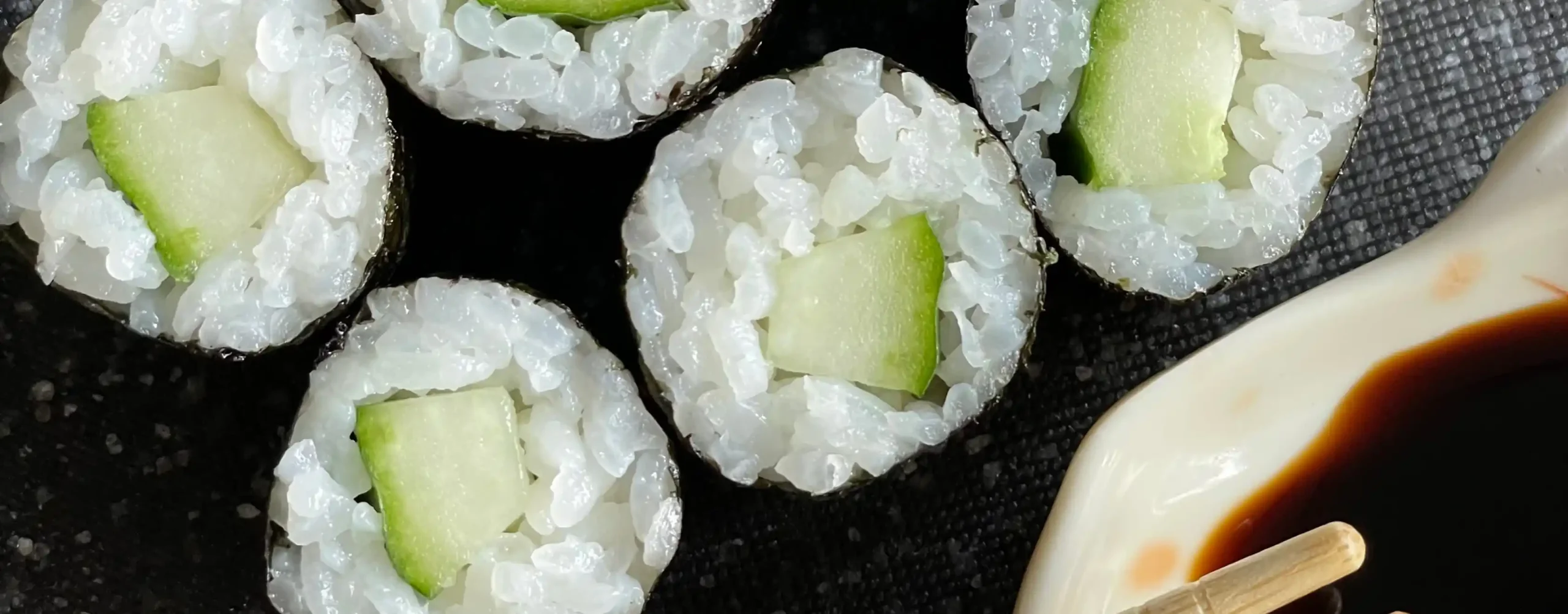
Honest Food Talks is a food blog that I created as a passion project. My initial goal was to test and refine SEO strategies in a real-world setting, in a niche I love – food and cooking.
Over time, it evolved into much more. As my blog’s organic visibility and user engagement steadily improved, Honest Food Talks became a valuable testing ground for high-performing SEO content, scalable publishing systems, and exploring YouTube SEO.
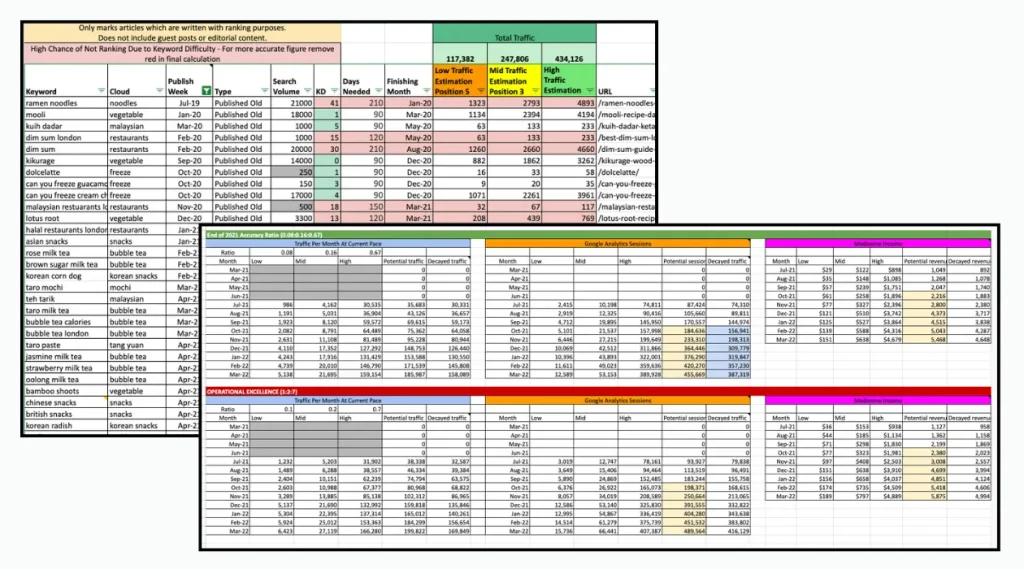
But with the initial success came constraints. Despite producing content that consistently ranked on Google and resonated with readers, my blog was limited by its capacity. I could only publish 1–2 articles per month. This bottleneck capped traffic growth, restricted revenue potential, and limited opportunities for strategic brand partnerships.
This case study explores how I tackled those challenges by scaling content production, optimising SEO at scale, and building a remote-first content operation designed for sustainable growth.
600K
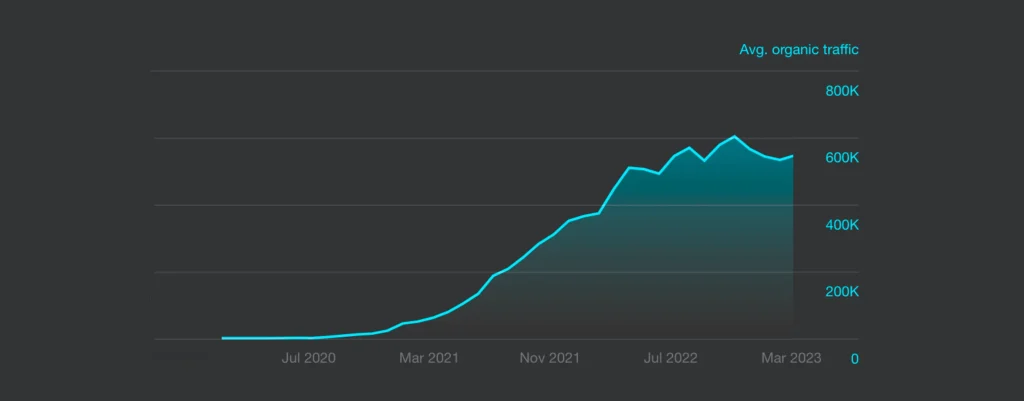
new users in 2 years
180K
revenue generated by pure SEO initiatives.
DR 55
from a Domain Rating (DR) 21
The Opportunity
Other than honing my SEO skills, achieving this growth would unlock multiple high-leverage opportunities:
Ad Monetisation Upgrade: With more than 50,000 monthly pageviews, Honest Food Talks would qualify for premium ad networks like Mediavine and AdThrive, which offer a higher revenue multiplier than entry-level platforms.
Brand Partnerships: Increased traffic and authority would make the blog a credible partner for established F&B brands and media outlets.
Long-Term Compounding Gains: Higher publishing volume supports better topic relevance and domain authority, creating a self-sustaining growth loop.
| Ad Networks | Basic | Premium |
|---|---|---|
| Networks | Google Ads, Ezoic | Mediavine, AdThrive |
| Entry Requirements | 0–10k monthly pageviews, automatic entry | 50k+ monthly pageviews, majority US traffic, editorial review |
| RPM (Revenue per 1k views) | £3.00 – £5.00 | £15.00 – £25.00 |
| Potential Monthly Revenue (at 500k visitors) | £1,500 – £2,500 | £7,500 – £12,500 |
The Challenge
To scale successfully, I had to solve three key challenges:
Outrank Established Competitors: My SEO strategy needed to be better than my competitors to compete in a saturated niche with high-authority domains.
Scale Without Overspending: Expanding content operations risked significantly increasing costs. I needed to build a lean and efficient system to maintain profitability.
Remote-First Execution: The entire operation—from hiring to publishing—had to be remote-friendly and asynchronous from day one.

The Approach
Agile, Data-Led SEO Strategy
To compete in a saturated niche with limited domain authority (DR 21) and small brand presence, I adopted an agile, high-ROI SEO strategy grounded in reality.
Instead of targeting high-volume, high-difficulty keywords, I did the following:
- Prioritised ‘low-hanging fruit’ keywords, which were low-competition or long-tail keywords aligned with our authority range.
- Built topical clusters with foundational content to establish subject matter relevance, even if some pieces brought little traffic.
- Developed a phased roadmap to climb the keyword ladder, increasing ambition with each 12-week sprint as domain authority and organic traffic improved.
I reviewed traffic performance every quarter, recalibrated the keyword targets, and used SERP data to refine the editorial strategy.
This SEO approach allowed me to win quick, early gains while compounding topical authority over time, balancing short-term wins with long-term positioning.
I also continuously improved on-page, technical, and off-page SEO aspects by prioritising initiatives that delivered measurable results within my resource constraints.
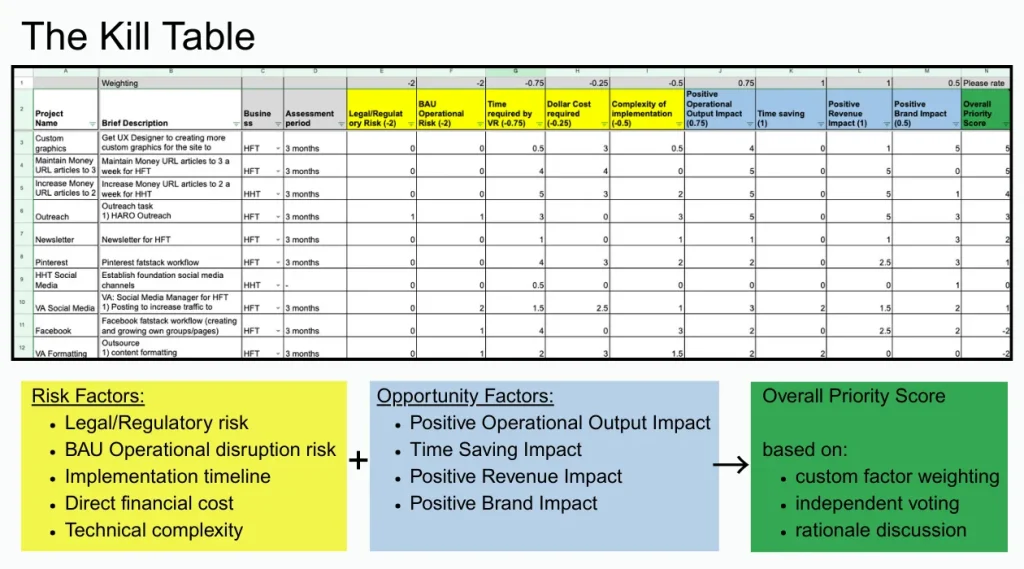
A “Kill Table” Prioritisation Framework
To stay lean and focused, I built a custom prioritisation framework—dubbed the “Kill Table”—that evaluated every initiative across effort, impact, cost, and timeline.
This system allowed me to:
Double down on high-impact, low-cost SEO initiatives (on-page and technical).
Defer expensive or slower-to-impact strategies (e.g., link building, digital PR) until I have momentum and cash flow.
Focus team energy on what moved the needle fastest in each 12-week sprint.
Tools Before Team
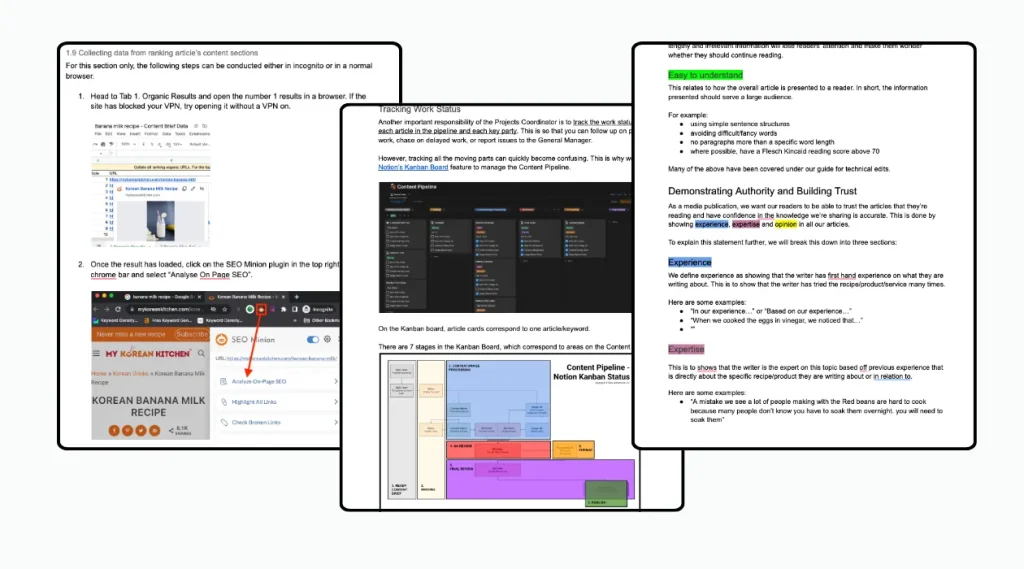
Rather than immediately expanding headcount, I focused on leveraging automation and operational tools to increase output without bloating the team.
Before hiring:
I found productivity and SEO tools to boost internal efficiency.
I purchased tools that demonstrated ROI and adopted quality improvements.
For remote hires, such as virtual assistants, writers, and editors, I created internal documentation and training to integrate them seamlessly into the workflow.
SEO Tests
By regularly experimenting, I could fine-tune the website’s SEO strategy. Some tests include:
- SEO Research and Content Production: Utilised GenAI tools for content production.
- Keyword Strategy: Varied semantically related keywords and their placement in text to improve rankings.
- Link Equity: Increased homepage links to extend link equity to new articles.
- Content Refresh: Increased refresh pace for time-sensitive articles to compete with major publications.
- Schema Markup: Implemented different types to see whether they would enhance search listings for CTR.
Using this knowledge, I created successful strategies for my clients and achieved better page rankings of search engine results (see case studies).
Results
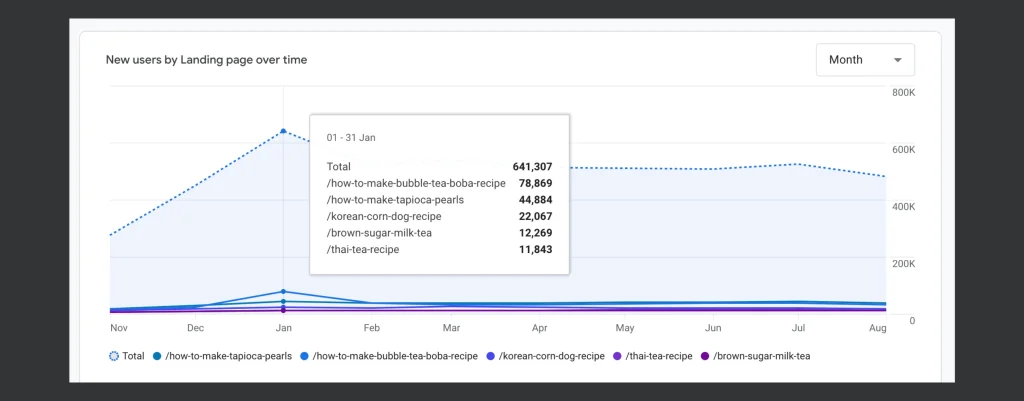
Within one year, site traffic grew from 10,000 monthly users to 420,000. At its peak in 2023, the site received over 600K new users, generated over £8,000 in monthly sales for affiliate partners, and achieved a five-figure revenue through display advertising.
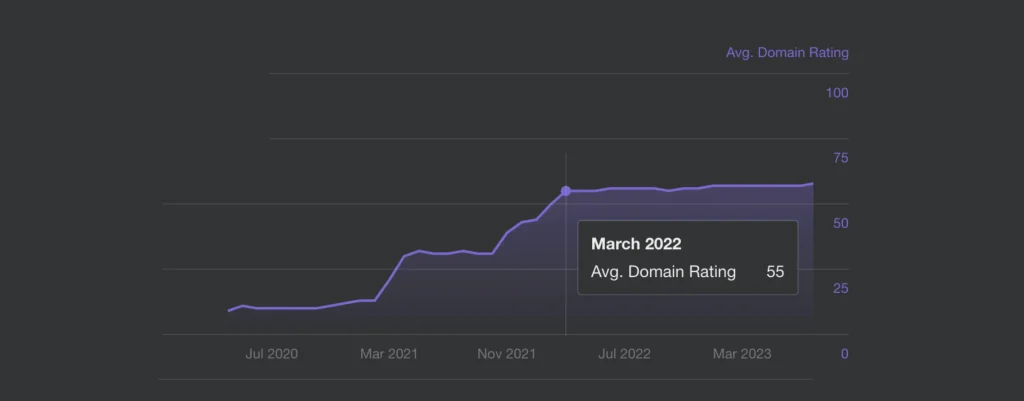
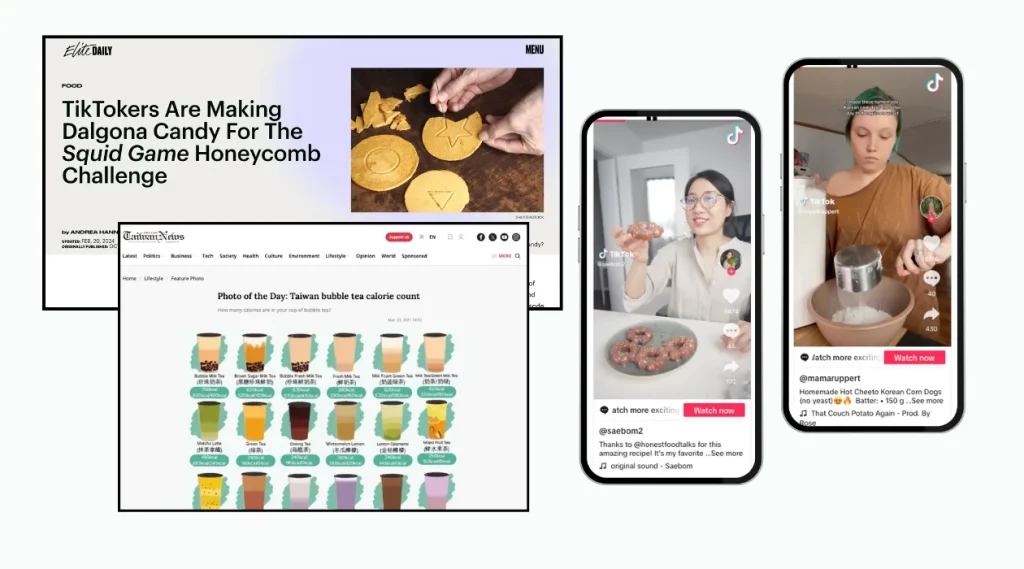
The website’s domain authority also grew to DR 55 on Ahrefs and is cited in publications such as Yahoo, Mirror UK, EliteDaily, Tatler, and more. Fun fact: I did a BBC Radio Scotland interview on Mornings with Kaye Adams!
Reflections
Overall, this was a successful personal project as I achieved my goal of testing, learning, and proving my SEO skills.
I actively worked on the site between 2021 and 2023. However, in the summer of 2023, I slowed down and moved away from the site for a few reasons:
- Increased SEO freelance clients (see case studies)
- Increased workload at my Full-Time Job (see 300% Growth in 12 Months: SEO Website Overhaul)
- Learning and implementing YouTube SEO (see Scaling a YouTube Channel to 1M Views)
- Planning a wedding
While the site is still live, it has not been updated with new content and has slowly lost traffic in the past few Google algorithm updates.